Water is one of those household essentials that’s easy to take for granted. You turn on the tap, fill a glass, start the coffee maker, or step into the shower without giving much thought to what is happening behind the scenes. Then one day you notice white scale around the faucet, an unusual taste, or spots that seem impossible to remove from the shower door.
That’s usually when water treatment gets your attention.
The good news is that improving household water doesn’t have to mean installing every filtration technology available. Different systems solve different problems, and the best choice depends on what’s actually in your water, how much water your household uses, and what you want to improve.
A little investigation upfront can save a lot of frustration later.
Start With the Water You Have
Before choosing equipment, find out what you’re dealing with. Water can contain naturally occurring minerals, sediment, chlorine, dissolved solids, or other substances depending on its source and local conditions.
A water test can provide useful information about hardness, pH, iron, manganese, chlorine, and other characteristics. Private well owners may have additional reasons to test regularly because groundwater conditions can change over time.
This step matters because a filter isn’t a universal solution. Equipment designed for chlorine taste and odor won’t necessarily address hardness, and a softener isn’t intended to remove every dissolved contaminant.
In other words, treat the water problem you actually have, not the one an advertisement happens to describe.
Hard Water Can Be a Daily Nuisance
Hard water is primarily associated with calcium and magnesium. These minerals are naturally occurring, but they can create plenty of household headaches.
You might notice mineral deposits around faucets, scale inside appliances, dull-looking glassware, or soap that doesn’t rinse as easily as you’d like. Water heaters and other equipment can also develop scale over time.
water softeners are designed specifically to address hardness by using an ion-exchange process that reduces calcium and magnesium in the treated water.
The result can be less scale and a different feel when washing. But softening should be viewed as one part of water treatment, not a complete answer to every possible water-quality concern.
If your water has multiple issues, additional treatment may be appropriate.
Drinking Water May Need a Different Approach
The water coming from every faucet doesn’t necessarily need the same level of treatment.
For many households, the main priority is drinking and cooking water. In that situation, a point-of-use system installed at the kitchen sink may be a practical option.
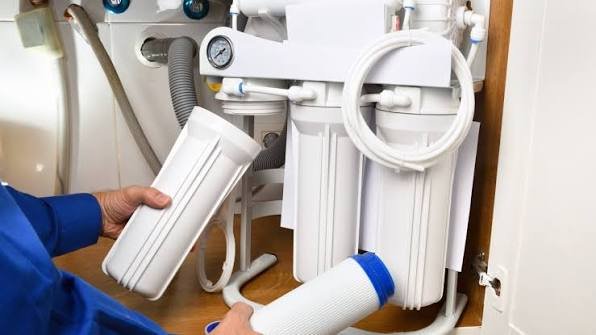
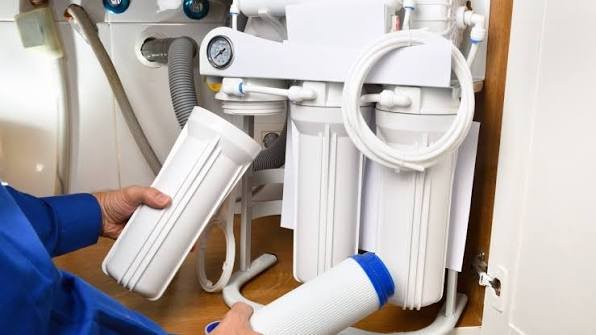
Reverse osmosis is often used for this purpose. reverse osmosis units force water through a semipermeable membrane, reducing many dissolved substances from the treated water.
RO can be effective, but it isn’t maintenance-free. Prefilters and membranes need replacement, and the system may produce some wastewater during operation. Water pressure and system capacity also matter.
That’s why installation should be based on actual household demand rather than simply choosing the biggest system available.
Taste and Odor Are Worth Paying Attention To
Sometimes the issue isn’t a safety concern at all. You simply don’t like the way your water tastes.
Chlorine, certain minerals, and other compounds can influence taste and odor. Activated carbon filtration is commonly used to improve these characteristics.
This can have an unexpectedly practical effect. If tap water tastes good, people are more likely to drink it. You may use fewer bottled-water products, refill reusable bottles more often, and stop buying cases of water simply because the faucet isn’t appealing.
Small changes can add up.
Still, taste should not be the only measure of water quality. Water can taste perfectly normal while containing substances that aren’t noticeable to your senses. Testing remains important when there is a specific concern.
What About Alkaline Water?
Alkaline water has attracted plenty of attention in recent years, particularly among people interested in drinking-water preferences and filtration technology.
alkaline water filters are designed to alter water chemistry in ways that can increase its pH, often through mineral-based media or related filtration technologies.
It’s worth keeping expectations realistic. Alkaline water isn’t a magic replacement for a comprehensive treatment system, and a higher pH doesn’t automatically mean water is cleaner.
If your primary concern is removing a particular contaminant, choose a treatment method designed and tested for that contaminant. If you simply prefer the taste or characteristics of alkaline water, an appropriate filter can be considered as part of that goal.
Knowing the difference between treatment and preference helps keep expectations grounded.
Whole-House Treatment Has Its Place
If water problems affect several areas of your home, treating only the kitchen faucet may not make much sense.
Whole-house systems treat water as it enters the property. Depending on the design, they can address sediment, chlorine, hardness, odors, or other identified concerns before water travels through the plumbing.
This can be especially useful when mineral buildup affects showers, appliances, bathroom fixtures, and laundry.
However, whole-house equipment generally requires more planning than a small point-of-use filter. Flow rate, pressure, installation space, and household demand all need to be considered.
A professional assessment can help determine whether whole-home treatment is justified.
Don’t Ignore Your Plumbing
Sometimes the problem isn’t coming from the water source.
Older pipes, fixtures, storage tanks, and plumbing connections can influence water quality after water enters the property. If you’re noticing a problem only at one faucet, that can be an important clue.
For example, if water looks or tastes different from a rarely used fixture, the issue may deserve a plumbing inspection rather than a new filtration system.
This is another reason broad assumptions can be expensive. You don’t want to install a major treatment system to solve a problem that actually comes from one aging component.
Maintenance Is Part of the Purchase
Every treatment system requires some level of maintenance.
Filters eventually need replacement. RO membranes have a service life. Water softeners need appropriate settings and regeneration. Tanks, valves, and other components may require inspection.
Before buying equipment, ask what routine maintenance involves. How often are filters changed? How much do replacements cost? Does the system require professional servicing?
These questions are not glamorous, but they matter.
A system that’s affordable to install but difficult or expensive to maintain may become frustrating over the years. On the other hand, equipment with a predictable maintenance schedule is easier to live with.
Be Careful With Over-Treatment
More treatment isn’t necessarily better.
If your water has one straightforward issue, you may not need a complicated system with several stages and components. Every additional piece of equipment brings extra cost, maintenance, and potential failure points.
The best approach is usually targeted treatment.
Test the water, identify the problem, and select technology that addresses it. If additional treatment is needed later, it can be evaluated based on evidence rather than guesswork.
This keeps the system practical and easier to understand.
Look at the Long-Term Value
When comparing systems, don’t focus only on the installation price.
Consider replacement filters, membrane costs, salt or other consumables, electricity, water usage, servicing, and expected equipment life.
A slightly more expensive system may prove more economical if it operates efficiently and uses readily available replacement parts. Meanwhile, a bargain system can become expensive if cartridges are difficult to find or require frequent replacement.
Think in years, not just the first weekend after installation.
The Right System Should Make Life Easier
Good water treatment doesn’t need to become a hobby. Ideally, it quietly solves the problems that matter and then gets out of the way.
Start with testing. Understand your water. Decide whether your priority is hardness, taste, odor, dissolved contaminants, or another specific issue. Then choose technology that matches that goal.
You may need a softener, reverse osmosis, carbon filtration, alkaline filtration, whole-house treatment, or a combination. Or you may discover that you need far less equipment than you expected.
That’s perfectly fine.
The smartest water treatment decision isn’t the one with the most technology. It’s the one that gives your household the results you want, remains manageable to maintain, and makes sense for your budget over time.
When you can pour a glass from the tap without wondering what’s going on inside the pipes, that’s when the system is doing its job properly.