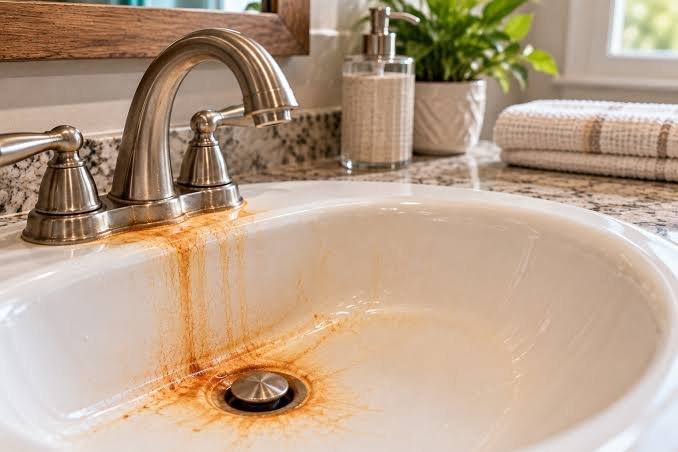
You might notice it while cleaning the bathroom on a Saturday morning. There’s a reddish ring around the drain, stubborn marks inside the toilet bowl, or white residue collecting on the kitchen faucet. Maybe your freshly washed clothes have picked up a rusty tint, even though you haven’t changed your detergent. These little annoyances can be frustrating, especially when they keep coming back no matter how often you clean.
In many homes, the explanation has something to do with the minerals naturally present in the water supply. Iron, calcium, magnesium, and manganese can affect water’s appearance, the way it feels on your skin, and how well household appliances perform. The good news is that these issues can often be managed. The trick is understanding what’s actually in your water before choosing a treatment system.
Why Water Can Leave Stains Around the House
Water travels through soil, rock, pipes, and treatment systems before reaching your tap. Along the way, it may pick up dissolved minerals and other substances. Their concentration depends on the local environment, the water source, and sometimes the condition of the plumbing.
Some minerals are harmless at typical drinking-water concentrations, but they can still create an unwelcome mess. Others may need closer attention because elevated levels can affect water quality or indicate a problem that deserves investigation.
For homeowners using private wells, these changes can be particularly noticeable because groundwater chemistry varies from one location to another. Municipal water can also cause staining or mineral buildup, although the reasons may differ.
Rather than scrubbing harder or replacing fixtures immediately, start by looking for patterns. Are the stains reddish, brown, black, or chalky white? Do they appear throughout the home or only near one faucet? Does the water sometimes look cloudy after sitting unused? These observations provide useful clues, though testing is needed to identify the cause with confidence.
Iron and Those Persistent Rust-Colored Marks
Iron is a common mineral in groundwater. It can enter the water naturally as it moves through iron-bearing rocks and soil. In some cases, corrosion inside plumbing can contribute iron as well. When dissolved iron comes into contact with oxygen, it may oxidize and form reddish-brown particles that settle on surfaces.
That explains why iron causing rust stains is such a familiar problem in homes with certain well-water supplies. The marks may appear around sinks, bathtubs, toilets, laundry fixtures, and even on light-colored clothing. Once deposits build up, ordinary household cleaners may struggle to remove them completely.
Iron can also give drinking water a metallic taste or create an unpleasant appearance. However, the absence of visible staining doesn’t guarantee that iron levels are low, and the presence of rust-colored marks doesn’t automatically mean the drinking water is unsafe.
A water test can determine how much iron is present and whether it is dissolved, particulate, or present in more than one form. That distinction matters because different forms may require different treatment approaches.
Finding a Practical Solution for Iron
Treatment depends on the concentration of iron and the characteristics of the water. Some systems use oxidation followed by filtration to capture iron particles. Others are designed to remove dissolved iron under specific conditions. A sediment filter alone may help with particles already suspended in the water, but it generally won’t solve every dissolved-iron problem.
Before buying equipment, ask for a test that measures iron and other relevant water-quality indicators. If the staining began suddenly, consider having the plumbing inspected too. A treatment system can address water chemistry, but it won’t repair a deteriorating pipe.
Hard Water: More Than Just White Deposits
Hard water contains relatively high amounts of dissolved calcium and magnesium. These minerals occur naturally and aren’t usually considered a health concern at common concentrations. Still, they can make everyday cleaning more difficult.
You may recognize the signs immediately: cloudy glassware, crusty deposits around showerheads, soap that refuses to lather properly, or a film that seems to cling to the bathtub. Over time, mineral scale can accumulate inside pipes, water heaters, dishwashers, and other equipment that regularly handles heated water.
The practical effects of hardness often become most noticeable in the bathroom and laundry room. Soap reacts with calcium and magnesium, making it harder to create a rich lather. Mineral deposits can also make towels feel stiff and leave spots on dishes, even after a complete wash cycle.
There’s an economic side to the problem, too. Heavy scale buildup may reduce heat-transfer efficiency in water heaters and increase maintenance needs. How significant that effect becomes depends on the water’s mineral content, appliance design, temperature, and maintenance habits.
Should You Install a Water Softener?
A conventional ion-exchange water softener reduces hardness by replacing calcium and magnesium ions with sodium or potassium ions. For many households, it can reduce scale buildup and improve the feel of water during bathing and cleaning.
However, softeners aren’t the right choice for every water problem. They don’t automatically remove iron, manganese, bacteria, or all other contaminants. Some models can handle limited amounts of iron under specified conditions, but performance depends on the system and water chemistry.
People following a sodium-restricted diet may also want to discuss softened drinking water with a healthcare professional or consider leaving the kitchen drinking-water supply untreated by the softener. Potassium-based regeneration is another option, although it has its own cost and suitability considerations.
Testing the water’s hardness before installation helps you choose equipment of an appropriate size instead of paying for more treatment than the home needs.
Manganese and the Dark Stains People Often Overlook
Manganese is another naturally occurring mineral found in groundwater. At elevated concentrations, it can create dark brown or black staining on plumbing fixtures, laundry, and bathroom surfaces. In some cases, deposits may resemble dirt or mold, making the actual source difficult to identify.
The presence of manganese deserves attention for reasons beyond appearance. Although it is an essential nutrient in small amounts, excessive exposure can pose health concerns, particularly for infants and young children. Applicable drinking-water guidelines and testing recommendations vary by location, so results should be interpreted using local public-health guidance.
Manganese can be difficult to remove consistently because its chemical form and concentration influence treatment performance. Some systems use oxidation and filtration, while other specialized media may be appropriate for particular water conditions. A system that works well for iron isn’t necessarily guaranteed to remove manganese effectively.
If dark staining keeps returning, don’t rely on a general-purpose filter without confirming its capabilities. Request testing for both iron and manganese, along with other measurements that can affect treatment, such as pH. A water-treatment professional can then recommend equipment designed for the specific results.
Why Water Testing Should Come Before Treatment
It’s tempting to choose a filter after reading a few product reviews or hearing that a neighbor installed a softener. But two houses on the same street can have different plumbing materials, water sources, or treatment needs. What works well for one may do very little for the other.
A useful water test should match the source and the problem. Private well owners generally need routine testing for relevant contaminants, including bacteria and nitrate, as well as additional tests when staining or taste changes appear. People using municipal water can review the supplier’s quality report and arrange household testing if they suspect an issue within their own plumbing.
Ask the laboratory or qualified professional which tests are appropriate and how samples should be collected. Poor sampling practices can affect results, so follow the instructions carefully.
Once you have the results, compare treatment options based on performance, installation costs, ongoing maintenance, and replacement parts. Certified equipment designed for the contaminant of concern is usually a more dependable choice than a product that makes broad, unsupported claims.
Better Water Begins With Understanding It
Mineral stains can make a home feel harder to maintain than it should be. The bathroom needs constant scrubbing, dishes lose their shine, and appliances may require extra attention. Yet these problems often have a clear explanation once the water is tested properly.
Iron, hardness, and manganese behave differently, which is why a single treatment method rarely solves every issue. Identifying the cause first can save money, reduce unnecessary maintenance, and help protect household plumbing and equipment.
Most importantly, don’t judge water quality by appearance alone. Clear water can contain substances that aren’t visible, while stained water doesn’t always indicate a serious health risk. Reliable testing provides the information needed to make sensible decisions.
A little investigation at the beginning can prevent months of frustration later. And when the treatment matches the actual water conditions, keeping the home clean becomes easier—and the water coming from the tap becomes one less thing to worry about.