Water quality usually gets our attention at the kitchen sink. That’s where we taste it, fill a glass, make coffee, and notice when something seems slightly off. But the water entering your home doesn’t know that the kitchen is supposed to be the important room. It travels everywhere.
The same supply reaches your shower, washing machine, dishwasher, water heater, bathroom faucets, and outdoor fixtures. If the water contains characteristics that cause scale, staining, sediment, or unpleasant odors, those issues can show up throughout the property.
That’s where a broader approach starts to make sense. Instead of treating one faucet and hoping for the best, homeowners can look at the water entering the entire house and decide what, if anything, needs to be addressed.
Start With the Water You Actually Have
Before choosing equipment, understand your water source.
Municipal water and private well water can have very different characteristics. Even two homes receiving water from the same general source may experience different conditions because of plumbing, household equipment, well construction, or other factors.
A water test can provide useful information about hardness, pH, iron, manganese, sediment, and other characteristics depending on the test being performed.
This first step is easy to skip because buying equipment feels more productive. But knowing the problem first is usually cheaper than buying three different products and discovering that none of them addresses the real issue.
Why Whole-House Treatment Gets Attention
When a water concern affects multiple fixtures, point-of-use treatment may not be enough.
An under-sink filter can improve water at the kitchen faucet, but it won’t stop hard water from leaving deposits on the bathroom showerhead. A drinking-water system isn’t designed to protect every appliance connected to the plumbing.
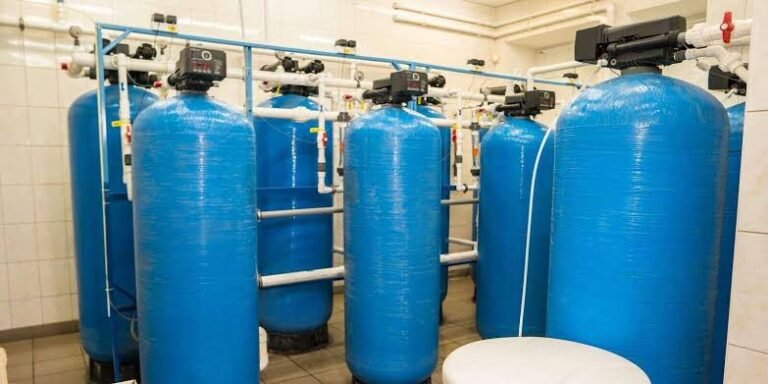
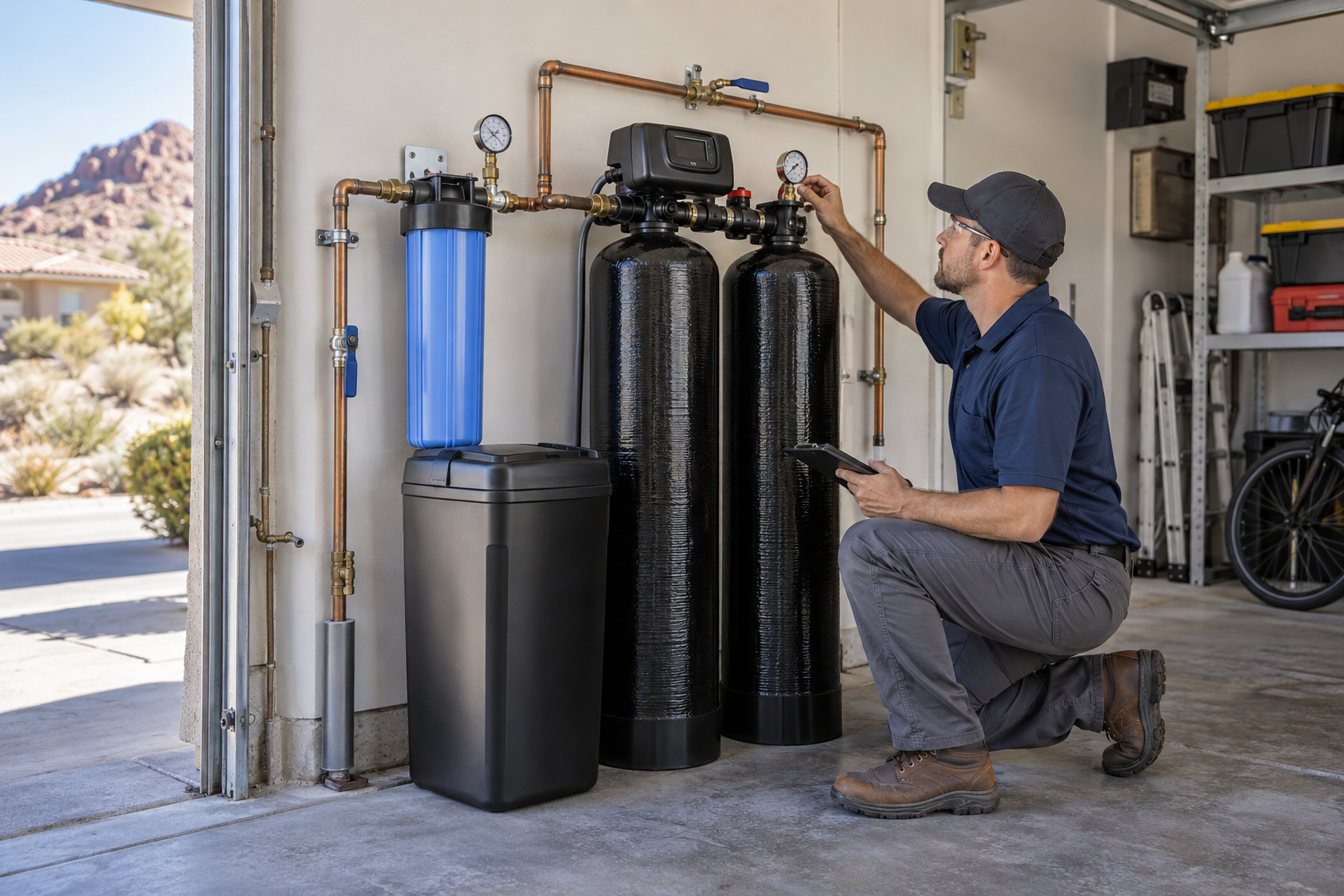
A properly planned whole house water treatment system works at the incoming supply point, allowing treated water to reach multiple parts of the property.
That doesn’t mean every home needs one. If your only concern is the taste of drinking water, a smaller point-of-use system may be more practical. The decision should follow the problem.
Hard Water Can Affect Daily Life
Hard water is one of the most common reasons people explore household treatment.
Calcium and magnesium dissolved in water can create scale on faucets, shower doors, appliances, and plumbing components. Soap may also behave differently, making cleaning feel like more work than it should.
Over time, mineral buildup can become particularly frustrating around equipment that heats water. Water heaters, coffee makers, and dishwashers may all encounter mineral deposits.
The answer isn’t automatically “buy a softener.” First, determine how hard the water actually is and whether the effects justify treatment.
Sediment Is Another Household Concern
Sediment can be easy to notice when it becomes severe, but small amounts may quietly accumulate in aerators, filters, and other components.
Private wells can sometimes experience sediment issues, particularly after environmental changes or disturbances. Plumbing work can also temporarily introduce particles into the water.
A sediment filter may help, but filter selection matters. Flow rate, particle size, filter capacity, and replacement intervals should all be considered.
A filter that clogs every few days isn’t a particularly convenient solution, no matter how impressive its specifications look on paper.
Think About Your Appliances Too
Water quality doesn’t only affect what comes out of the faucet.
Your water heater works with the incoming supply every day. So does the dishwasher. So does the washing machine.
If hardness or sediment is present, appliances may experience conditions that contribute to buildup or maintenance issues. This doesn’t mean water treatment will prevent every appliance failure — mechanical components still wear out — but suitable treatment can address certain water-related stresses.
This is one reason homeowners should consider the entire plumbing system rather than focusing solely on drinking water.
Comprehensive Protection Doesn’t Mean Treating Everything
The phrase comprehensive protection can sound like a reason to install every available treatment technology.
That’s not the right idea.
Good protection means addressing the characteristics that actually matter. If testing shows significant hardness, hardness treatment may make sense. If sediment is a concern, filtration may be appropriate. If drinking-water taste is the main issue, point-of-use carbon filtration or another suitable technology could be enough.
The objective is not to remove every possible substance from water. It’s to make the water appropriate for its intended uses while keeping the system practical.
Water Pressure Matters
Adding treatment equipment changes the plumbing system, so water pressure deserves attention.
Filters can become restrictive as they collect material. Some treatment technologies require certain pressure levels to work effectively. If your home already has low pressure, the wrong equipment could make an existing annoyance worse.
Before installation, consider the household’s normal flow requirements. A system should be capable of handling showers, laundry, dishwashing, and other simultaneous demands without becoming a bottleneck.
This is particularly important in larger homes where several fixtures may operate at once.
Maintenance Should Be Part of the Plan
A treatment system isn’t a “set it and forget it” appliance.
Filters need replacement. Softener systems may require salt and periodic servicing. Reverse osmosis components have their own maintenance schedules. Valves, connections, and other parts may also need inspection.
The maintenance requirements should be explained before installation.
Keep a simple record of replacement dates. Set reminders if necessary. If a system uses multiple filters, label them so you know which cartridge does what.
It may sound a little obsessive, but five minutes of organization can save a lot of confusion later.
Efficiency Is About More Than Saving Water
People often associate enhanced efficiency with using less water or electricity, but efficiency can also mean making better use of equipment.
A correctly sized treatment system shouldn’t be constantly struggling to keep up with household demand. Filters shouldn’t be replaced unnecessarily early, and equipment shouldn’t be operating outside its intended conditions.
For reverse osmosis systems, efficiency can also involve how much water is sent to drain compared with how much treated water is produced.
When comparing systems, ask about operating requirements, replacement costs, expected service intervals, and water usage. A slightly higher initial price may make sense if the equipment is easier and less expensive to maintain over time.
Don’t Ignore Taste and Odor Changes
A sudden change in taste or odor deserves attention.
Chlorine may be noticeable in some municipal supplies. Well water can have naturally occurring characteristics that affect taste or smell. Plumbing conditions can also influence what you notice at the tap.
Taste alone isn’t a reliable safety test, but a sudden change is worth investigating.
If the change affects only one faucet, the fixture or local plumbing may be involved. If it affects the entire house, the source may be further upstream.
That distinction can save you from replacing equipment unnecessarily.
Whole-House Treatment Isn’t Always the Answer
It’s worth saying this clearly: more treatment isn’t automatically better.
If your water is already suitable for your needs and you’re not experiencing a meaningful problem, adding layers of equipment may only increase cost and maintenance.
Testing and professional assessment can help determine whether treatment is necessary and, if it is, what type makes sense.
The best system is often the one that solves the problem without creating new ones.
Choosing Equipment for the Long Haul
Think beyond the installation day.
Ask how easy replacement filters are to find. Find out how frequently components need service. Understand warranty coverage and ongoing costs. Consider whether the equipment will still fit your household if water usage changes.
A treatment system is a long-term home investment. The cheapest option isn’t always the most affordable once replacement parts, maintenance, and operating costs are considered.
Likewise, the most expensive system isn’t automatically the best.
Fit matters more than price alone.
Better Water Starts With a Broader Perspective
Water treatment can be surprisingly simple when you stop treating it as a product-shopping exercise.
Start with the source. Identify the concern. Test when appropriate. Consider how the water affects the entire household, not just the kitchen faucet. Then choose equipment that addresses the actual problem.
A whole-house approach can be valuable when water-quality concerns appear across multiple rooms, but it should still be tailored to the home.
When everything is properly matched and maintained, the benefits are mostly quiet ones. Less scale. Fewer annoying deposits. Better-performing fixtures. More consistent water quality.
And perhaps that’s the nicest thing about a good treatment system: once it’s doing its job, you don’t have to think about it very much at all.