Water has a way of becoming part of the background. You turn on the shower, start the washing machine, fill a saucepan, rinse a plate, and never stop to think about what’s traveling through those pipes.
Then the little signs begin.
A faucet develops a chalky ring. Glass shower doors become cloudy. Towels feel different after washing. The water heater seems to need more attention than it once did. Maybe there’s an odd taste in the kitchen, too.
None of these things necessarily means there’s a serious problem with your water. But they can be signs that the characteristics of your household supply deserve a closer look.
For some homes, treating water at the point where it enters the property can be a practical way to address issues throughout the house. It isn’t the right answer for everyone, but when the water affects more than one faucet, whole-home treatment is worth understanding.
The Water Coming In Affects the Water Going Out
Your home’s water supply doesn’t stop at the kitchen faucet.
It moves through showers, toilets, washing machines, dishwashers, water heaters, outdoor taps, and every other fixture connected to the plumbing. If the incoming water contains high levels of hardness minerals, sediment, iron, or certain other substances, those characteristics can follow the water throughout the property.
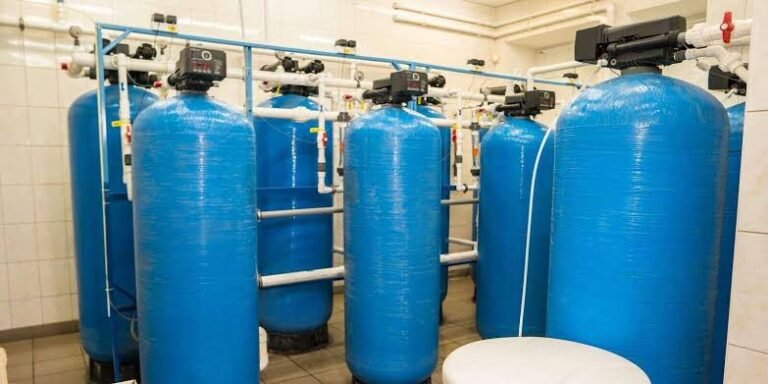
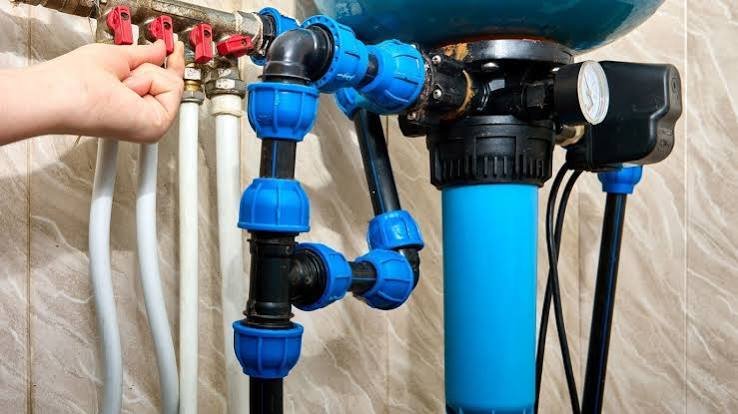
That’s the basic idea behind whole home water filtration. Instead of treating water only when you pour a glass, treatment takes place closer to the point where water enters the home.
The advantage is consistency. Every connected fixture can receive treated water, depending on the system and how the plumbing is configured.
Hard Water Is a Common Reason for Whole-Home Treatment
Hard water is primarily caused by dissolved calcium and magnesium.
You may notice it as white deposits around faucets, cloudy glassware, or soap that doesn’t seem to rinse as cleanly as expected. Over time, mineral scale can also develop inside pipes, fixtures, water heaters, and appliances.
A water softener is commonly used when hardness is the primary concern. It works differently from a standard sediment or carbon filter, which is why it’s important to understand exactly what you’re trying to remove or reduce.
If hardness is only a minor issue, you may not need whole-home treatment. If it affects nearly every water-using part of the house, however, treating the supply at the entry point can be much more practical.
Not Every Filter Does the Same Job
The term “water filtration” sounds straightforward until you start comparing actual equipment.
Some water filtration systems are designed to capture sediment. Others use activated carbon to improve taste and reduce certain chemicals. Specialized media can target iron or sulfur compounds, while reverse osmosis is often used for more extensive treatment of drinking water.
A softener, meanwhile, is designed mainly to address hardness.
This distinction matters. Buying a filter simply because it has impressive specifications doesn’t guarantee that it will solve your particular problem.
The system should be selected based on the water chemistry, household demand, and treatment goals.
Start With Testing
One of the smartest things a homeowner can do is test the water before investing in equipment.
Water may look clear and still contain elevated levels of dissolved substances. Likewise, an unpleasant odor doesn’t necessarily reveal exactly what’s causing it.
Testing can provide information about hardness, pH, iron, sulfur-related compounds, bacteria, and other characteristics, depending on the analysis.
For private well owners, regular testing can be especially valuable because groundwater conditions can change over time.
Think of testing as the starting point rather than an optional extra. It gives you information to work with.
Clean Water Is About More Than Appearance
A glass of clear water looks reassuring. But appearance alone isn’t enough to tell you everything.
Clean water should be considered in the context of its source, treatment, and intended use. A water treatment system designed to improve taste isn’t automatically designed to address every possible contaminant.
If testing identifies a particular concern, look for equipment specifically intended to reduce that substance and, where relevant, independently certified for the claimed performance.
It’s a more measured approach than buying something based on vague promises.
Think About the Entire Household
One benefit of treating water at the entry point is that the treatment isn’t limited to one room.
The shower gets treated water. So does the washing machine. The dishwasher, bathroom faucets, and water heater can all benefit from the same approach when the system is designed for whole-house use.
This can be especially appealing when the problem isn’t just about drinking.
If mineral deposits are appearing in several bathrooms, for example, a kitchen filter won’t solve the issue. Similarly, if iron is staining multiple fixtures, point-of-use filtration may leave much of the household unaffected.
The treatment area should match the problem.
Appliances Deserve Some Attention
Water quality can influence appliance maintenance in ways homeowners don’t always notice immediately.
Water heaters, dishwashers, coffee makers, washing machines, and humidifiers all interact with the household supply. Hardness and other water characteristics can contribute to deposits or affect equipment performance.
Reducing certain unwanted substances can make routine maintenance easier.
That doesn’t mean filtration will magically extend the life of every appliance. Proper cleaning, inspection, and manufacturer-recommended maintenance still matter.
But reducing avoidable exposure can be a sensible part of protecting household equipment.
Don’t Forget About Flow Rate
Whole-home equipment has to keep up with actual household demand.
Imagine someone taking a shower while the washing machine is filling and another family member opens a bathroom faucet. The system needs to handle that combined demand without creating a frustrating drop in flow.
That’s why sizing matters.
A system that’s too small may struggle during peak use. One that’s unnecessarily large may cost more than needed and could have higher operating or maintenance requirements.
Household size, plumbing configuration, incoming pressure, and peak flow should all be considered.
Maintenance Is Part of the Picture
Whole-home treatment doesn’t mean installing equipment and forgetting about it.
Filters eventually need replacement. Treatment media may need servicing. Softener salt needs to be replenished in traditional systems. Valves, tanks, and other components may also require periodic inspection.
Keep the system accessible. Leave enough space around it for service, and make a note of replacement dates.
A treatment system that isn’t maintained can gradually lose effectiveness, which defeats the purpose of having it in the first place.
Consider the Cost Beyond Installation
The initial purchase price is only one part of the equation.
Think about replacement filters, salt, electricity, water usage, service visits, and eventual component replacement. A system that looks inexpensive at first may cost more to operate over several years.
On the other hand, a more efficient system with straightforward maintenance can sometimes prove more economical over its useful life.
Ask for the complete picture rather than focusing only on the installation quote.
When Whole-Home Treatment May Not Be Necessary
There’s no reason to treat every gallon of household water if your only concern is drinking-water taste.
A point-of-use carbon filter or reverse osmosis system may be enough for a kitchen-focused problem.
Likewise, mild hardness may not justify a major investment.
The best solution depends on the severity of the issue and where you notice it. Whole-home treatment is most useful when the water concern affects multiple fixtures or when you want consistent treatment throughout the property.
A Better Approach Starts With Understanding
Water treatment doesn’t need to become a complicated project.
Start by identifying the symptoms. Test the water when appropriate. Understand which substances are actually present, then look at treatment methods designed for those conditions.
From there, consider household size, flow requirements, maintenance, operating costs, and installation.
You don’t need the biggest system on the market. You need one that fits.
When the equipment matches the water and the home’s actual needs, the benefits can become pleasantly unremarkable. Fewer deposits. Easier cleaning. Better-tasting water where you need it. Less time wondering why the faucet looks cloudy again.
Sometimes the best home improvements are the ones you stop noticing because they simply work.