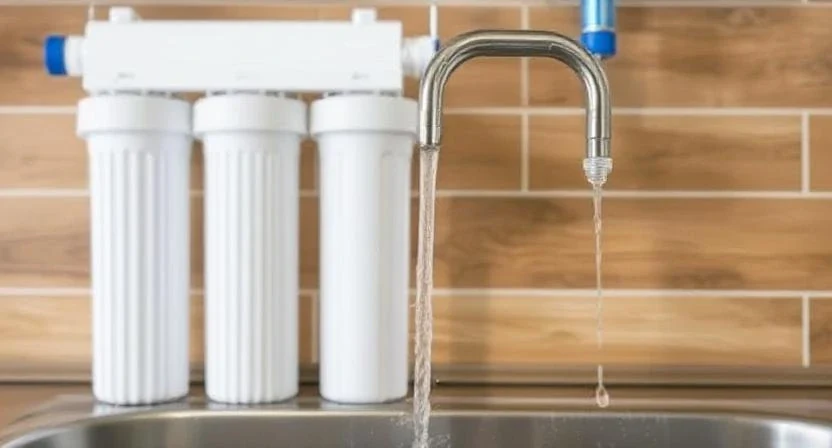
Most people think about water treatment at the kitchen sink. That’s understandable. It’s where we drink water, make coffee, cook meals, and fill bottles before leaving the house.
But what about everything else?
The shower, washing machine, dishwasher, water heater, bathroom faucets, and outdoor fixtures all rely on the same incoming water supply. If the water has significant hardness, sediment, chlorine, iron, or another issue, treating just one faucet doesn’t change what the rest of the house receives.
That’s where whole-house treatment can make a difference.
Instead of focusing on one point of use, the goal is to address water as it enters the property. Done properly, this can make water quality more consistent throughout the home while also supporting the plumbing and appliances that depend on it.
What Whole-House Filtration Actually Means
The phrase whole-home filtration sounds straightforward, but it can refer to several different types of systems.
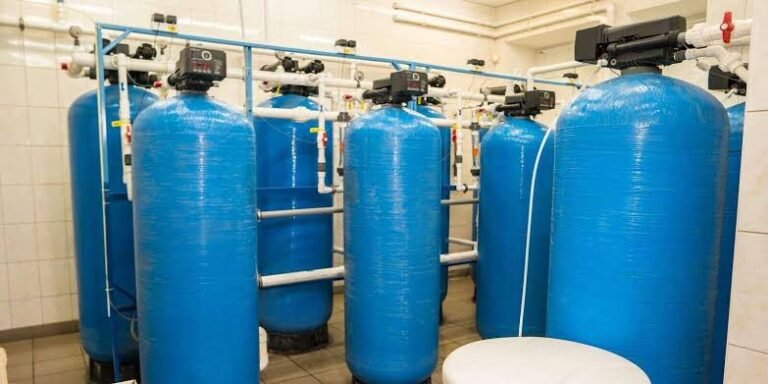
Some whole-house filters are designed primarily to reduce sediment and particles. Others use carbon media to improve taste and odor or reduce certain chemicals. Some systems combine multiple treatment stages to address several water-quality concerns.
The right setup depends heavily on the water source and what testing reveals.
This is important because a whole-house filter isn’t automatically a solution for every water problem. A standard sediment filter won’t soften hard water. A carbon filter isn’t designed to remove every dissolved contaminant. A UV system has a very different purpose again.
Good treatment starts with identifying the problem.
Why Treat Water Before It Reaches the Fixtures?
Think about the route water takes through your home.
It enters the property, moves through the main plumbing line, and then branches off toward kitchens, bathrooms, laundry areas, appliances, and other fixtures.
If treatment happens at the main entry point, filtered water can travel through the home’s plumbing instead of only being treated at one faucet.
That is the basic idea behind whole-home water filtration.
For households dealing with sediment, certain odors, chlorine taste, or other treatable characteristics, this can provide a more consistent approach than installing separate filters at individual taps.
It also means fewer small filtration devices scattered around the house.
The Shower Is Part of the Water-Quality Conversation
Drinking water gets most of the attention, but people spend plenty of time using water in the shower.
If the household water contains noticeable chlorine, sediment, or hardness, you may see or feel the effects. Mineral deposits can collect on showerheads and glass. Soap residue can become more difficult to rinse. Sediment can also create problems for certain plumbing components.
Whole-house treatment doesn’t automatically solve every shower issue, but treating the incoming water can address concerns that affect multiple fixtures.
For some homeowners, this broader approach is the main attraction.
Appliances Can Benefit From Better Water Conditions
Water-using appliances have to deal with whatever comes through the plumbing.
Dishwashers, washing machines, coffee makers, humidifiers, and water heaters all interact with household water. If the water contains significant mineral content or sediment, deposits can accumulate over time.
This doesn’t mean filtration guarantees longer appliance life. Equipment condition depends on many things, including design, maintenance, water chemistry, and usage.
Still, reducing certain unwanted substances can be part of a sensible strategy for caring for the home’s plumbing and equipment.
It’s a little like keeping dust out of a machine. You can’t prevent every problem, but reducing unnecessary exposure is generally helpful.
Whole-House Treatment Doesn’t Mean One Filter Does Everything
This is where some homeowners get confused.
A whole-house system is not necessarily a single piece of equipment that removes every possible contaminant.
You might need sediment filtration followed by carbon treatment. Another property could require a softener for hardness. A private well might have iron or manganese concerns that call for specialized treatment. In some situations, UV disinfection may be appropriate.
The technologies should be selected based on the water, not the other way around.
A professional water assessment can help determine which combination makes sense.
Start With the Source
Before choosing equipment, think about where the water comes from.
Municipal water supplies are treated and monitored, but household water can still have characteristics that affect taste, odor, or plumbing. Private wells have their own considerations because groundwater chemistry varies by location.
Properties using cisterns or storage tanks also need to consider how water is collected and stored.
The source helps determine what should be tested and what treatment options are appropriate.
Without that information, it’s easy to spend money on equipment that solves the wrong problem.
Testing Is More Useful Than Guessing
A clear glass of water doesn’t tell you everything.
Water testing can provide information about hardness, pH, iron, manganese, sediment, chlorine, bacteria, and other characteristics depending on the testing panel.
That information can help answer practical questions.
Do you actually need a softener? Is carbon filtration likely to improve taste? Is sediment entering the house? Is there a specific issue that requires specialized treatment?
Once the water is understood, equipment selection becomes much less mysterious.
And honestly, that’s better than buying something because the box says “advanced.”
Think About Flow Rate
Whole-house systems have to keep up with the home’s water demand.
If several people are showering, someone is washing laundry, and a dishwasher is running at the same time, the treatment system needs enough capacity and flow to handle the demand without creating unnecessary pressure loss.
System sizing should therefore consider peak flow, not just average household consumption.
A professional installer can evaluate the plumbing configuration and recommend equipment that fits the property.
An undersized system can become frustrating quickly.
Installation Matters
A whole-house treatment system connects directly to the property’s main water line, so installation deserves careful attention.
The location needs to provide enough room for equipment, filter changes, servicing, and any required drain or electrical connections.
A bypass valve is also useful because it allows the water supply to operate around the treatment equipment during maintenance or service.
Good installation isn’t just about making the pipes connect. It’s about making the system practical to own.
If you can’t reach the filter without moving half the garage, maintenance becomes much less appealing.
Maintenance Keeps the System Useful
Every treatment system eventually needs attention.
Filters become loaded. Media can lose effectiveness. Valves and other components may need servicing. Settings may need adjustment.
A maintenance schedule doesn’t have to be complicated. Keep track of filter replacement dates and follow manufacturer recommendations.
Pay attention to changes in water flow, taste, odor, or appearance, too. These can be useful signs that something needs investigation.
Ignoring maintenance defeats much of the reason for installing the system in the first place.
Is Whole-House Treatment Right for Everyone?
Not necessarily.
Some homes have relatively few water-quality concerns and may benefit more from a simple point-of-use filter at the kitchen sink.
Other properties have water characteristics that affect multiple fixtures, making whole-house treatment a more logical choice.
The right decision depends on the source, test results, household needs, budget, available space, and willingness to maintain the equipment.
There isn’t a prize for treating more water than necessary.
Better Water Starts at the Point of Entry
When water quality concerns affect more than one faucet, treating the incoming supply can make a lot of sense.
The biggest advantage is consistency. Instead of having one filtered glass of water at the kitchen sink while everything else in the house receives untreated water, a properly designed system can provide better water at every faucet.
That can make daily routines easier, reduce certain maintenance concerns, and create a more consistent water experience throughout the property.
But the smartest approach is still the simplest one: test the water first, understand what needs attention, choose treatment accordingly, and maintain the system once it’s installed.
Whole-house filtration isn’t about buying the biggest system available. It’s about making the water entering your home work better for the people, plumbing, and appliances that rely on it every day.
And when the solution is properly matched to the water, the best result is often the one you barely notice — because everything simply works.