Every freelancer starts the same way — undercharging, taking whatever project shows up, and wondering why the good clients never seem to find them. Knowing how to find freelance clients who actually value your work changes everything.
I’ve noticed the freelancers who struggle most aren’t lacking skill — they’re lacking visibility in the right places.
Why Marketplaces Alone Aren’t Enough
Relying only on freelance marketplaces puts you in a race to the bottom on price. Learning how to find freelance clients outside these platforms usually means better rates and better working relationships.
1. Build a Portfolio That Shows Results, Not Just Work
Clients don’t just want to see what you made — they want to see what it achieved. “Increased email open rates by 22%” beats “wrote email copy” every single time.
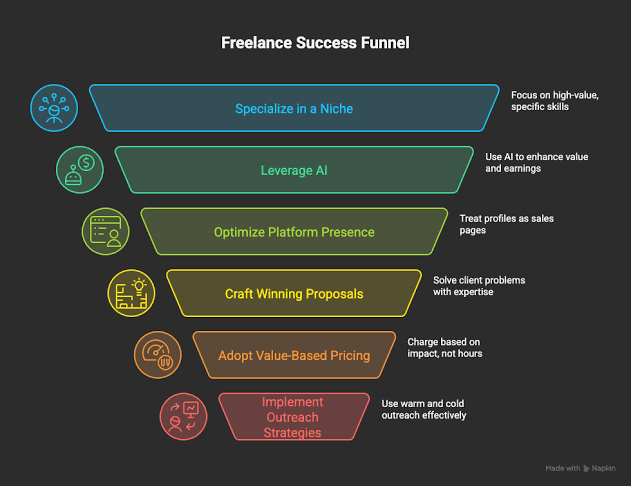
2. Warm Outreach Beats Cold Pitching
Reach out to people you’ve worked with before, even loosely — past colleagues, old clients, university connections. Referrals convert far better than cold emails to strangers.
3. Position Yourself as a Specialist
“I do graphic design” attracts low-budget clients. “I design packaging for D2C food brands” attracts clients willing to pay premium rates because you sound like exactly what they need.
Quick answer: specialising in one niche, rather than offering broad general services, consistently helps freelancers command higher rates because clients perceive specialists as lower-risk hires.
4. Use LinkedIn Actively, Not Passively
Posting genuinely useful content related to your niche, even once a week, builds visibility that eventually turns into inbound inquiries — without you pitching anyone directly.
- Comment thoughtfully on posts from your target client industry
- Share small wins or lessons from recent projects
- Avoid generic motivational posts that don’t showcase actual expertise
5. Ask Existing Clients for Referrals Directly
Most freelancers wait for referrals to happen naturally. Simply asking “do you know anyone else who might need this?” after a successful project often works surprisingly well.
6. Attend Industry-Specific Events, Even Virtual Ones
Generic networking events attract too broad a crowd. Events specific to your niche — say, a D2C brand marketing webinar — put you in front of exactly the right potential clients.
7. Price Based on Value, Not Hours
Clients seeking cheap hourly rates rarely become long-term high-paying clients. Value-based pricing attracts clients who care more about outcomes than hourly cost.
8. Keep a Simple, Professional Website
Even a one-page site with your portfolio and a contact form adds legitimacy that marketplace profiles alone can’t match.
FAQ
Q: Where do high-paying freelance clients usually come from? Referrals and direct outreach typically yield higher-paying clients than open marketplaces, since there’s less price competition.
Q: How do I raise my freelance rates without losing clients? Raise rates gradually for new clients first, and communicate value clearly rather than just announcing a price increase.
Q: Is LinkedIn effective for finding freelance clients? Yes, particularly for B2B services, if used consistently rather than just having a passive profile.
Q: Should beginners still use freelance marketplaces? They can help build initial reviews and portfolio pieces, but shouldn’t be your only long-term client source.
Q: How long does it take to build a steady freelance client base? Most freelancers see consistent inbound inquiries within 6-12 months of consistent visibility efforts.
Conclusion
Figuring out how to find freelance clients who pay well comes down to visibility, specialisation, and asking for referrals directly instead of waiting passively. [link to related guide about freelancing vs full-time work here] Start with one channel — LinkedIn, referrals, or niche events — and go deep rather than spreading thin across everything at once.