Getting traffic is easy compared to actually converting it into paying customers. That gap is exactly what a solid sales funnel strategy is meant to fix.
I’ve seen businesses spend lakhs on ads while their funnel had a massive hole at the checkout stage. Fixing that leak mattered more than any extra ad spend.
What Is a Sales Funnel, Really?
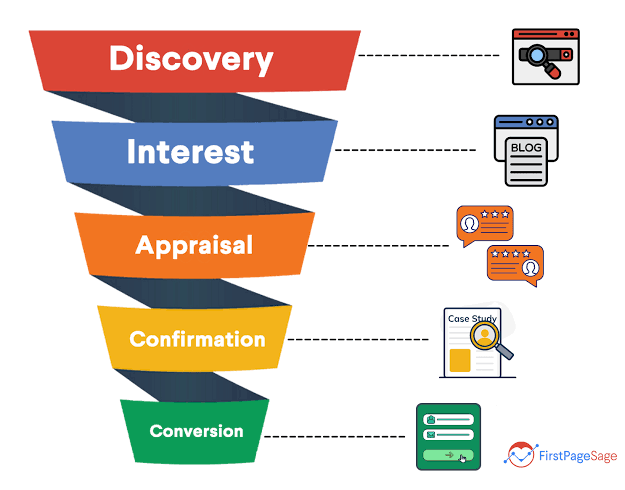
A sales funnel strategy maps the stages a stranger passes through before becoming a paying customer — awareness, interest, decision, and action — with each stage needing a different message.
Stage 1: Awareness — Get Found First
This is where people first hear about you — through SEO, social media, ads, or word of mouth. Your job here isn’t to sell. It’s to be useful or interesting enough that people remember you.
Stage 2: Interest — Give Them a Reason to Stay
Once someone lands on your site, they’re deciding in seconds whether to stay or leave. Clear value propositions, no clutter, and fast load times matter enormously here.
- A confusing homepage kills interest instantly
- Too many options create decision paralysis
- One clear next step keeps people moving forward
Stage 3: Decision — Remove Doubt
This is where testimonials, case studies, and guarantees do their heaviest lifting. People at this stage aren’t asking “what is this” anymore — they’re asking “should I trust this.”
Quick answer: the decision stage of a sales funnel is where social proof, pricing clarity, and risk-reversal (like refund policies) matter most — this is where most funnels lose people unnecessarily.
Stage 4: Action — Make Buying Effortless
Every extra form field, every confusing button, every unclear pricing page costs you sales. Reduce friction at checkout as much as humanly possible.
Common Funnel Leaks (and Fixes)
- No follow-up email sequence — most leads don’t buy on the first visit; a 3-5 email nurture sequence recovers a chunk of them
- Weak call-to-action — “Learn More” converts worse than “Start Your Free Trial”
- Too much friction at signup — asking for 10 fields when 3 would do
- No retargeting ads — most visitors leave without buying; retargeting brings a meaningful percentage back
Measuring Funnel Performance
Track conversion rate at each stage separately, not just the final number. If 1000 people visit but only 5 buy, you need to know exactly where the other 995 dropped off — awareness, interest, or decision.
A Real Example
A small e-commerce brand I know was getting decent traffic but barely any sales. Turned out their “Add to Cart” button was below the fold on mobile. One design fix, and conversions jumped noticeably within two weeks. Sometimes the fix really is that simple.
FAQ
Q: What’s the difference between a sales funnel and a marketing funnel? A marketing funnel focuses on awareness and lead generation; a sales funnel extends further into the decision and purchase stages.
Q: How long should a sales funnel be? It depends on your product — a low-cost item might convert in one visit, while high-ticket products often need weeks of nurturing.
Q: What tools help build a sales funnel? Landing page builders, email automation tools, and basic analytics are usually enough to start.
Q: How do I know if my funnel is broken? Check drop-off rates at each stage — a sudden drop points you straight to the problem area.
Q: Should small businesses bother with funnels? Yes — even a simple 3-stage funnel beats sending all traffic straight to a “Buy Now” page with no nurturing.
Conclusion
A working sales funnel strategy isn’t about fancy tools — it’s about understanding where people drop off and fixing that one leak at a time. [link to related guide about content marketing here] Start by mapping your current funnel honestly, even on paper, and you’ll likely spot the weak point faster than you’d expect.