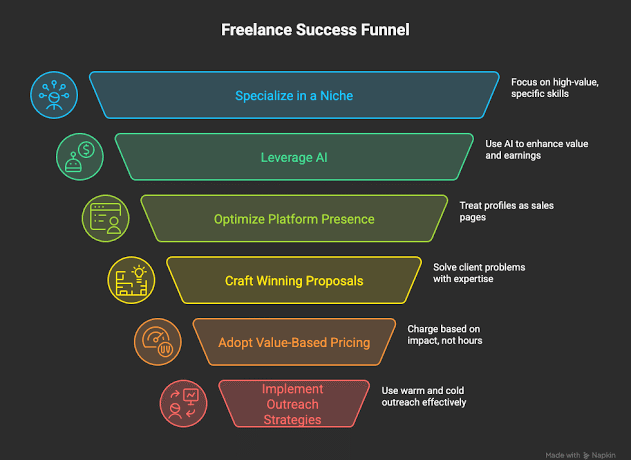
This debate — freelancing vs full time job — comes up constantly, and honestly, there’s no universally right answer. It depends entirely on what you value more: stability or flexibility.
I’ve made both choices at different points, and each came with trade-offs I genuinely didn’t expect going in.
The Core Trade-Off
Freelancing vs full time job essentially comes down to trading guaranteed income and structure for flexibility and unlimited earning potential — neither is objectively superior, just different fits for different people.
Income Stability
A full-time job gives you a predictable monthly amount, which matters enormously if you have loans, dependents, or simply hate financial uncertainty. Freelancing income can fluctuate wildly, especially in the first year or two.
Earning Ceiling
- A salaried role typically has a defined pay band and slow annual increments
- Freelancing has no upper cap — skilled freelancers in high-demand niches can out-earn salaried peers significantly
- But freelancing also has no floor — a bad month can mean very little income
Flexibility and Control
Quick answer: freelancing offers far more control over working hours and client selection, while full-time jobs offer more structure, benefits, and typically less decision fatigue around finding your next paycheck.
Benefits and Perks
Full-time jobs usually come with health insurance, paid leave, and retirement contributions — freelancers have to arrange and fund all of this themselves, which is easy to underestimate when calculating “equivalent” income.
Skill Growth
Freelancing often forces faster skill growth because you’re exposed to varied clients and problems quickly. A full-time job can offer deeper, more structured growth within one domain, sometimes with formal training and mentorship.
Social and Team Aspects
I’ve noticed people underestimate how much they miss daily team interaction after going freelance. Working alone suits some personalities brilliantly and slowly drains others.
Which Suits You Better?
Ask yourself honestly:
- Can you handle 2-3 months of unpredictable income without panicking?
- Do you thrive with structure, or do you resent being told what to do?
- Are you comfortable finding your own clients, or do you prefer work simply being assigned?
- Do you value benefits like health insurance enough to sacrifice flexibility for them?
A Middle Path Exists
Plenty of people freelance part-time alongside a full-time job before fully transitioning. This reduces risk considerably and lets you test whether freelancing actually suits your temperament before making it your only income.
FAQ
Q: Is freelancing riskier than a full-time job? Generally yes, particularly in the first year, though the risk decreases significantly once you build a steady client base.
Q: Can freelancers earn more than full-time employees? Yes, especially in specialised, high-demand fields, though it usually takes time to reach that level.
Q: Should I quit my job immediately to freelance full-time? Most experts recommend building some freelance income on the side first before fully quitting a stable job.
Q: Do freelancers get any job security? Not in the traditional sense, but diversifying across multiple clients reduces the risk of losing all income at once.
Q: Is freelancing suitable for introverts? Often yes — freelancing typically involves less forced daily social interaction than a traditional office job.
Conclusion
There’s no universal winner in freelancing vs full time job — it genuinely depends on your risk tolerance, need for structure, and financial situation. [link to related guide about finding freelance clients here] If you’re unsure, testing freelancing part-time alongside your current job is the lowest-risk way to find out which fits you.