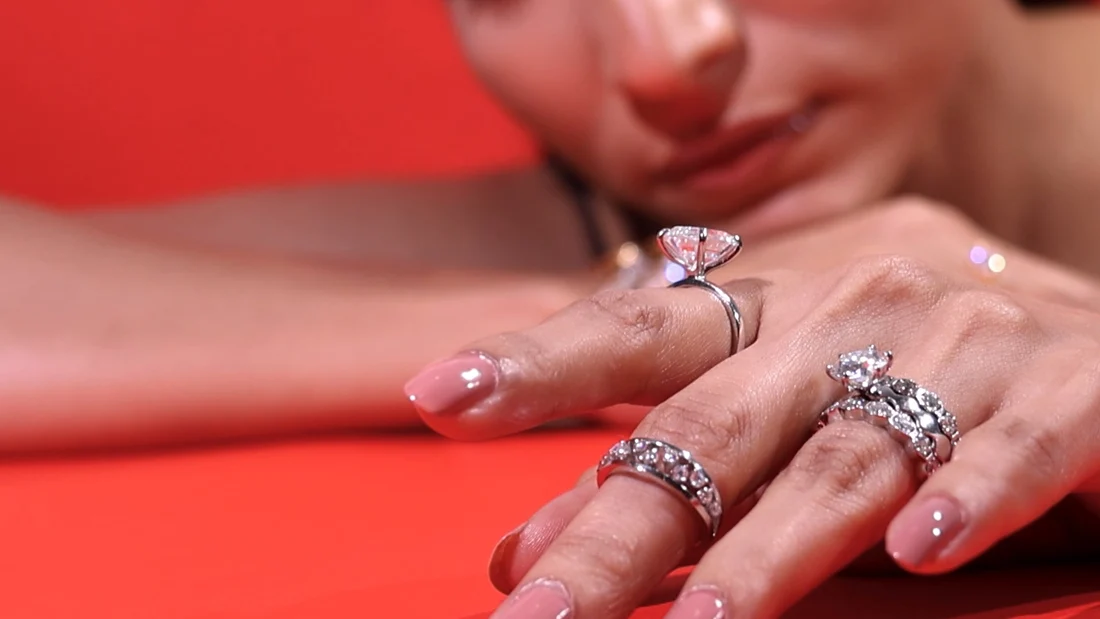
A fine jewellery label can make a sustainability claim sound as if it applies to the whole piece. In practice, it may cover a single supplier, one component or a particular stage of production. Ask what the words describe before trying to compare them with another seller’s claims. That is easier to do at the level of one ring or necklace, where the stones, metal and method of making can be discussed separately.
Decide which claim would affect your purchase and write it down in the seller’s own terms. You can then ask questions about the wording. A discussion of sustainability in jewellery choices gives useful background. The next step is to find evidence that applies to the piece in front of you.
Ask what the claim actually covers
If the gold is described as recycled, ask which parts of the piece use it. A cast body can come from a different source from a clasp, chain or setting. Ask whether the seller can confirm the claim in the order description. If a certification is mentioned, ask for its name, who holds it and what part of the supply chain it covers.
Read any claim about manufacture in the same way. Designed locally, cast locally and fully made locally refer to different work. If that distinction matters to you, ask which steps take place where. A clear answer will let you compare two designs on terms that mean the same thing.
Match the evidence to the statement
A diamond report may establish whether a diamond was grown in a laboratory. A production or energy claim calls for evidence about where and how it was grown. Ask whether the information applies to the exact stone, a named supplier or the company’s average. Check whether smaller accent stones are covered. If you receive a general statement, ask whether anything ties it to your order.
For a vintage piece, ask how it was dated and which parts have been replaced. A condition assessment and an earlier appraisal may tell you more than a short description on a tag. Ask how much of the ring’s history the seller can support and whether there is any work to budget for after purchase.
Look at the way the jewel can be kept in use
Ask how the piece would be cleaned, repaired or resized. A sturdy clasp that can be replaced or a mount that can be checked may affect how long you want to wear the jewellery. Consider whether the style is something you can imagine keeping in regular use. A strong claim about materials is easier to appreciate in a piece that also fits your needs.
Save the invoice, written descriptions and care instructions. If a claim is important enough to influence your purchase, ask for written confirmation before paying. When evidence has clear limits, decide whether the part you can verify is enough for your purposes. You can compare a different piece if you need information the seller does not have.
Final Thought
Read a sustainability claim as a statement about a specific material, process or piece of evidence. Ask the seller to show how it applies to your choice. Once you understand its scope, you can weigh it alongside condition, design and future care.