Introduction
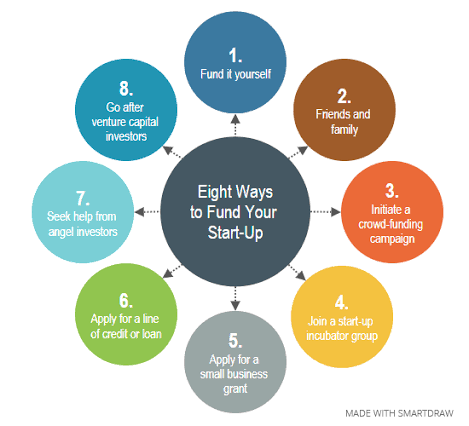
Raising money sounds glamorous until you’re actually in a room pitching to investors who ask hard questions. Understanding your real startup funding options — not just the ones that make headlines — matters more than chasing a big check.
Why Not Every Startup Needs VC Money
Direct answer: Among all startup funding options, bootstrapping remains the best fit for most early-stage founders since it keeps full ownership and forces disciplined spending before external pressure kicks in.
VC funding gets the press coverage, but it’s not the default path — nor should it be.
1. Bootstrapping
Using your own savings or early revenue to fund growth. Slower, but you keep control and avoid diluting equity too early.
2. Friends and Family Round
Common in India, though it comes with emotional complications if things go south. Keep it formal with a proper agreement, even if it’s your uncle’s money.
3. Angel Investors
Individuals who invest early, usually ₹10 lakh to ₹1 crore range, often bringing mentorship along with the cash.
- Look for angels with relevant industry experience
- Networks like Indian Angel Network are a good starting point
- Expect equity dilution of 5-15% typically
4. Venture Capital
For startups with genuine scale potential, VC funding brings larger cheques but also higher expectations around growth rate.
[link to related guide about pitching to VC investors here]
5. Government Grants and Schemes
Startup India Seed Fund, state-level incubator grants — these are underused among Indian founders, honestly. Less competitive than VC rounds too.
6. Crowdfunding
Platforms like Kickstarter or Indian equivalents work well for product-based startups with a strong story and community appeal.
7. Revenue-Based Financing
A newer option gaining traction — you repay based on a percentage of monthly revenue instead of giving up equity.
How to Decide Which Startup Funding Option Fits You
Ask yourself honestly: do you need the money to survive, or to scale faster? Survival-stage founders should lean bootstrapped or friends-and-family; scale-stage founders can consider VC.
FAQ
Q: What are the main startup funding options available in India? Bootstrapping, angel investment, VC funding, government grants, and crowdfunding are the most common routes.
Q: How much equity should I give up in a seed round? Typically 10-20%, though this varies based on valuation and investor terms.
Q: Is VC funding right for every startup? No — it suits high-growth, scalable businesses more than lifestyle or niche businesses.
Q: Are government startup grants difficult to get? Not necessarily, though they do require proper documentation and a clear business plan.
Q: Can I combine multiple funding options? Yes, many founders mix bootstrapping with a small angel round before considering VC.
Conclusion
There’s no single “correct” path through the maze of startup funding options — it depends entirely on your stage, your appetite for control, and how fast you genuinely need to grow. Take the time to map your real needs before chasing the flashiest option on the list.